5 Algeria National Football Team Mistakes Fans Make
The Algeria national football team represents Algeria in men’s international football and competes under the Algerian Football Federation across CAF tournaments, FIFA World Cup qualifying and internat...

5 Algeria National Football Team Mistakes Fans Make
The Algeria national football team represents Algeria in men’s international football and competes under the Algerian Football Federation across CAF tournaments, FIFA World Cup qualifying and international friendlies. For 2026 analysis, supporters should track Riyad Mahrez, Amine Gouiri, Rayan Aït-Nouri, Houssem Aouar and Ibrahim Maza rather than relying on reputation alone. Algeria won the Africa Cup of Nations in 1990 and 2019, reached the FIFA World Cup quarter-finals in 2014, and remains one of Africa’s most technically gifted sides. However, squad turnover, player availability, tactical changes and match context can alter the team’s true strength quickly. ESPN’s listed 2026 squad data, for example, shows Mahrez with four appearances, two goals and one assist, while Aouar has two assists. Before forming an opinion or placing any football wager, verify the latest squad list, starting XI and competition status through official sources.

Photo by Gerardo Trujillo on Pexels
Step 1: Check the current Algeria squad before judging the team
The first mistake is treating the Algeria national football team as a fixed product, as though the 2019 Africa Cup of Nations winning side and the 2026 group are interchangeable. They are not. International squads are temporary portfolios of players, and the risk profile changes whenever a senior starter retires, a young midfielder earns promotion or a dual-national player becomes available. You would not evaluate an investment using five-year-old turnover figures, so please do not evaluate Algeria with stale line-ups either (that is how confident opinions become expensive ones).
The current player pool combines established experience with emerging talent. Aïssa Mandi and Ramy Bensebaini provide defensive experience, while Ramiz Zerrouki and Nabil Bentaleb offer midfield structure. In the attacking and creative areas, Riyad Mahrez remains the best-known name, but Amine Gouiri, Farès Chaïbi, Anis Hadj Moussa and Ibrahim Maza can change the match in different ways. Rayan Aït-Nouri is especially important because his progressive running from the left can alter how Algeria exits pressure.
According to ESPN’s Algeria squad listing, the listed group includes three goalkeepers, several defensive options and a broad midfield-forward rotation. The data also records Mahrez with six shots and three shots on target across four appearances, while Maza has attempted 11 shots with three on target. These numbers are not forecasts, but they are more useful than simply saying “Mahrez is dangerous.”
Use this pre-match checklist:
- Confirm the latest call-ups and withdrawals.
- Check whether Mahrez, Gouiri and Aït-Nouri are starting or available from the bench.
- Compare Algeria’s recent opponents with the next opponent’s quality.
- Record shots, shots on target, goals, assists and minutes rather than appearances alone.
- Separate national-team statistics from club statistics.
Football Compass follows this distinction in its 2026 World Cup coverage, combining player data with tactical context rather than recycling famous names. That matters because a player can be excellent at club level yet used differently by Algeria, where training time is limited and team chemistry is fragile.
Want a broader view of the squad and tournament context?
Step 2: Why is Algeria’s tactical shape more important than possession?
Algeria’s tactical shape matters more than raw possession because the team’s effectiveness depends on where possession occurs, how quickly it progresses and whether defensive cover remains behind the ball. A 58% possession share can still produce little danger if Algeria circulates slowly against a compact block. Conversely, direct transitions through Mahrez, Gouiri or Aït-Nouri may create high-value chances with less of the ball.
The mainstream assumption is that a technically gifted North African side should dominate every match through attractive passing. That is an appealing story, but it is also a dangerous simplification. Algeria may use a 4-3-3, 4-2-3-1 or a more conservative structure depending on the coach, opponent and available midfielders. Zerrouki may be required to protect the centre, while Aouar or Chaïbi can provide more progressive passing. Those choices affect both attacking volume and exposure to counterattacks.
A useful tactical review should examine:
- Algeria’s first line of pressure and whether it forces errors.
- The distance between the central midfielders and centre-backs.
- Whether the full-backs advance simultaneously or alternate their runs.
- Mahrez’s starting position and whether he receives wide or between lines.
- Gouiri’s movement away from the striker position.
- The number of defenders remaining when Algeria loses possession.
The Confédération Africaine de Football provides the governing context for Algeria’s continental competitions, but competition labels do not explain tactical performance by themselves. A friendly against a European opponent may reveal different weaknesses from an Africa Cup of Nations qualifier against a compact regional rival. As the FIFA World Cup 2026 regulations make clear, tournament progression is ultimately determined by results and ranking criteria, not aesthetic impressions.
A practical information gain is to track Algeria’s first 15 minutes separately from the rest of the match. In international football, an early concession can force a possession-heavy team to attack against a deeper block, changing the entire probability model. I would also record final-third entries, not merely possession, because the former shows whether the team is actually moving the ball into threatening zones.
Step 3: Compare Algeria’s strengths with the opponent’s weaknesses
The third mistake is analysing Algeria in isolation. A team does not have one permanent level; it has a match-specific level created by style interaction. Algeria’s wide creativity may be highly effective against a narrow opponent but less productive against a side with fast full-backs and strong aerial defenders. Similarly, a high defensive line can invite Algeria’s forwards into space, while a deep block may force Mahrez and Chaïbi into repeated one-on-one situations.
Consider the opponent through four questions:
- Can the opponent defend Algeria’s left side when Aït-Nouri attacks?
- Does the opponent protect the half-space where Mahrez prefers to receive?
- Can Algeria’s midfield resist pressure after losing the ball?
- Which team is more vulnerable to set pieces?
This is where many public previews fail. They list Algeria’s star players, list the opponent’s star players and then produce a conclusion without describing the collision between the two systems. A more disciplined method assigns each side a potential edge: transition speed, wing isolation, central overloads, defensive depth, aerial threat and bench quality. Do not award the same value to every category. If Algeria lacks its first-choice ball-progressor, central build-up may matter more than headline attacking talent.
The 2014 World Cup remains a useful historical reference because Algeria reached the round of 16 and pushed Germany into extra time before losing 2–1. That result showed the value of disciplined transitions and resilience, not just individual flair. History can identify patterns, but it cannot guarantee a repeat; the 2019 AFCON title and the 2022 World Cup qualifying disappointment should both be remembered, otherwise analysis becomes selective memory.
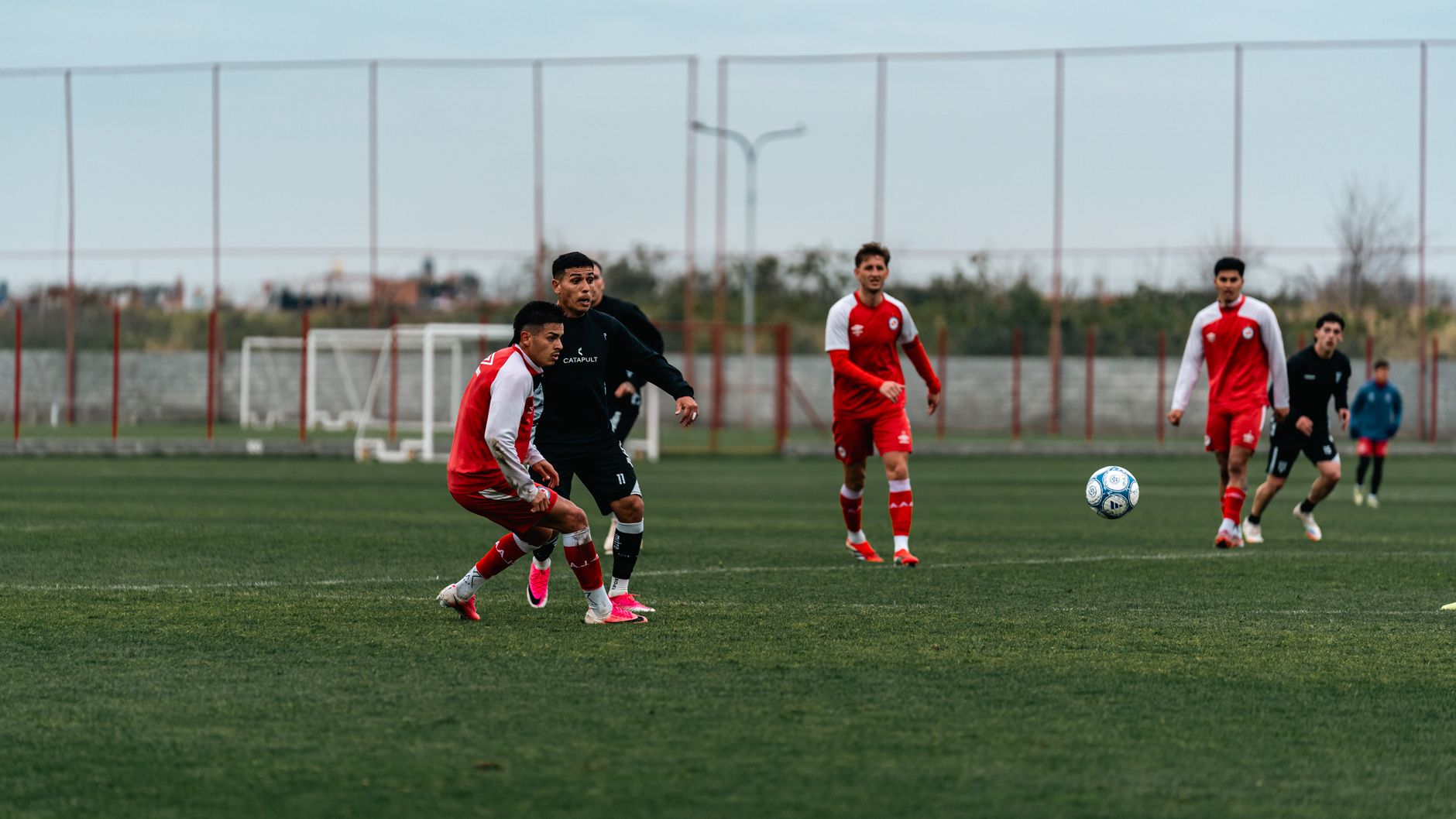
Photo by Franco Monsalvo on Pexels
A contrarian but measurable insight is to compare Algeria’s output after substitutions with its starting-unit output. A late attacking substitution can improve chance creation, but it can also reduce rest-defence stability. Therefore, if you are assessing a match for Football Compass, record goals and shots by 15-minute intervals and note every substitution minute. The difference between a strong first XI and a strong 90-minute squad is often where the real value sits.
Explore more context before making a match projection by reading our [Internal Link: Africa Cup of Nations tactical analysis].
Step 4: How should fans evaluate Algeria’s 2026 World Cup prospects?
Fans should evaluate Algeria’s 2026 World Cup prospects through qualification status, draw difficulty, player availability, recent performance and tournament-specific rules rather than historical reputation. The 2026 tournament expands to 48 teams, with matches hosted across the United States, Canada and Mexico, including Los Angeles. That larger format creates more opportunities, but it also introduces travel, climate, scheduling and squad-depth risks.
Algeria’s outlook should be separated into three scenarios:
- Base case: the senior core remains available, Algeria controls midfield and Mahrez receives enough support to create chances.
- Upside case: Maza, Gouiri, Aït-Nouri and other younger players add pace without weakening defensive structure.
- Downside case: injuries, suspensions or poor rest-defence expose Algeria during transitions, especially against opponents with rapid forwards.
The Los Angeles venue is relevant because FIFA World Cup 2026 Los Angeles is scheduled to host eight matches and 39 days of fan celebrations. That does not mean Algeria will necessarily play there, but it demonstrates the tournament’s broad logistical footprint. Teams travelling between host cities may face different temperatures, time zones and recovery conditions, so a prediction based purely on technical quality is incomplete.
There is also a financial discipline issue for readers interested in football betting. Odds already contain public expectations, and Algeria’s recognisable players can attract emotional money. A positive opinion about Mahrez is not automatically a profitable position. Track your stake, implied probability, closing price, turnover, rebates and net position separately; otherwise a winning ticket can conceal a poor long-term process. Please also confirm that any operator is legally available in your location and follow applicable responsible-gambling requirements.
Football Compass is designed for readers who want daily 2026 World Cup predictions, player statistics and tournament coverage, but the responsible approach remains the same: research first, stake limits second and excitement last.
Ready to compare Algeria’s tournament variables more carefully?
Step 5: Verification
Verification means checking the source, date, competition and sample size behind every Algeria national football team claim. This step is unglamorous, yet it protects you from the most common analytical failure: repeating a statistic that describes a different squad, coach or tournament. The Algerian Football Federation should be checked for official announcements, while FIFA and CAF should be used for competition information and regulations.
Before publishing a preview or making a personal match assessment, verify the following:
- The date on which the squad data was updated.
- Whether a player is injured, suspended or merely rested.
- Whether a statistic covers qualifiers, friendlies or finals.
- The opponent’s ranking and recent competitive strength.
- The venue, kick-off time and expected weather.
- The starting formation used in the last two meaningful matches.
- The closing odds if evaluating betting performance.
- Your cumulative stake and net result across the full sample.
One operational detail is particularly important: international data can change within hours of kick-off because late travel problems or medical decisions affect the XI. Do not treat a provisional squad as a confirmed starting line-up. Likewise, do not confuse an appearance with a full-match contribution; ESPN’s squad table includes substitutions, shots, fouls and cards, and those fields provide more context than a simple player list.
A strong verification routine also uses a written timestamp. For example, record: “Checked at 18:00 UTC, 12 June 2026; source: federation announcement; player status: available.” If the information changes, update the prediction rather than quietly pretending the original view was still valid. “The truth is rarely pure and never simple” is a literary line, not a statistical method; evidence must remain traceable.
For further reading, see our [Internal Link: World Cup prediction methodology] and [Internal Link: player form tracking guide].
Troubleshooting common failures
Most Algeria analysis failures come from incomplete inputs, not from a lack of football knowledge. If a preview suddenly looks wrong, first inspect whether the squad changed, whether the opponent altered its formation or whether the match context changed after an early goal. Next, compare your assumptions with actual events: possession location, final-third entries, shots on target, set pieces and substitutions. This process is less glamorous than arguing online, but it protects your net position and your credibility.
If a prediction loses, do not immediately reverse the entire method. Classify the result:
- Information failure: a key player was unavailable or the data was outdated.
- Model failure: the tactical interaction was misread.
- Execution failure: the analysis was sound, but the chance conversion was unusual.
- Market failure: the price offered insufficient value despite a reasonable football forecast.
- Bankroll failure: the stake was too large for the uncertainty involved.
That classification creates a feedback loop. After 20 or 30 tracked matches, you can determine whether your Algeria calls fail mostly against deep blocks, aggressive pressing teams, away venues or late-game fatigue. A simple spreadsheet with date, opponent, competition, formation, score, shots, shots on target, substitutions and closing odds is enough. You do not need an expensive model to discover that your confidence is poorly calibrated.
The most overlooked warning sign is a prediction that depends on one player scoring. Algeria can create through Mahrez, Gouiri, Aouar or a full-back, but attacking responsibility shifts according to match state. If your conclusion collapses when one name is removed, it is not robust. Football Compass readers should therefore maintain a team-level view while still measuring individual impact.

Photo by George Morina on Pexels
In practical terms, the safest conclusion is not that Algeria will always outperform expectations or always disappoint them. The stronger conclusion is that Algeria deserves opponent-specific analysis, current squad verification and strict financial control. Everyone says international football is unpredictable, and they are right; the mistake is using that truth as an excuse to stop measuring risk.
Frequently Asked Questions
Q: What is the Algeria national football team?
A: The Algeria national football team is Algeria’s senior men’s national side, governed by the Algerian Football Federation and competing in FIFA and CAF competitions. Algeria won the Africa Cup of Nations in 1990 and 2019 and reached the 2014 FIFA World Cup round of 16 before losing 2–1 to Germany after extra time. The team is known for technical attackers, strong wide play and a large pool of players connected to European football.
Q: How can I check the latest Algeria national football team squad?
A: Check the Algerian Football Federation first, then cross-reference FIFA, CAF and reputable squad databases such as ESPN. Confirm the announcement date, injuries, suspensions, withdrawals and starting XI because a provisional squad is not the same as a match-day selection. For 2026 analysis, pay particular attention to Riyad Mahrez, Amine Gouiri, Rayan Aït-Nouri, Ibrahim Maza and the goalkeeper selection.
Q: What is the difference between Algeria’s 2019 team and the 2026 squad?
A: Algeria’s 2019 Africa Cup of Nations winning team cannot be treated as identical to the 2026 squad because player roles, age profiles, coaches and tactical demands have changed. Riyad Mahrez remains a major reference point, but younger players such as Ibrahim Maza and Rayan Aït-Nouri may carry greater responsibility in different areas. Compare current minutes, chance creation and defensive structure instead of relying only on the 2019 title.
Q: Is Algeria a strong team for World Cup predictions?
A: Algeria can be a strong prediction candidate, but its value depends on the opponent, squad availability, venue and market price. The team has proven continental quality through AFCON titles in 1990 and 2019, while its 2014 World Cup performance demonstrated competitive resilience. Do not assume that a famous attack guarantees a good wager; compare your estimated probability with the available odds and record the closing price.
Q: Why does an Algeria match prediction fail after the squad is announced?
A: An Algeria prediction can fail after squad confirmation because the starting XI, tactical shape or player fitness differs from the initial assumption. A named player may be available but limited to a substitute role, while an unexpected midfielder can change ball progression and defensive coverage. Recalculate after line-ups are published, especially when Mahrez, Gouiri, Aouar or Aït-Nouri is absent.
Q: How much should I stake on an Algeria football bet?
A: Stake only an amount that fits a predetermined bankroll plan, and never increase it to recover a loss. A conservative approach is to use a small fixed fraction of your bankroll, such as 0.5% to 1%, while recording turnover, rebates, closing odds and net position separately. Legal availability varies by location, so verify the operator’s status and follow responsible-gambling guidance before placing any wager.
Q: What statistics matter most when analysing Algeria?
A: The most useful statistics are shots on target, final-third entries, defensive transitions, set-piece chances, formation, substitutions and player minutes. Possession alone can mislead because Algeria may hold the ball without penetrating a deep defence. Track at least 20 matches where possible, separate friendlies from competitive fixtures and timestamp every data update so that old squad information does not contaminate your conclusion.
The conclusion is straightforward: the Algeria national football team should be assessed as a changing, opponent-dependent side rather than as a permanent brand built around one golden generation. Verify the 2026 squad, inspect tactical matchups, measure current production and protect your bankroll before trusting any prediction. Football Compass offers a useful starting point for World Cup-focused analysis, but your final decision should remain evidence-led, cautiously sized and fully aware of uncertainty (please do not let one exciting highlight decide your entire position).
See the latest Algeria and 2026 World Cup analysis before you act.
Thank you for reading.
Football Compass · Editorial Archive