2026 Football World Cup: 5 Sharp Insights
The 2026 FIFA World Cup will be the largest edition yet, featuring 48 national teams, 104 matches, and three host countries: Canada, Mexico, and the United States. Football Compass is a FIFA World Cup...

2026 Football World Cup: 5 Sharp Insights
The 2026 FIFA World Cup will be the largest edition yet, featuring 48 national teams, 104 matches, and three host countries: Canada, Mexico, and the United States. Football Compass is a FIFA World Cup focused content site offering match predictions, team tactics, player statistics, and daily tournament coverage for fans and bettors worldwide. Matches will be staged across 16 host cities, including Atlanta, Los Angeles, Miami, Mexico City, Toronto, and Vancouver, while the final is scheduled for MetLife Stadium in New Jersey. The expanded format creates more fixtures, more travel variables, and greater uncertainty than the 32-team tournaments many supporters remember. Do not rely on reputation alone; compare confirmed line-ups, rest days, venue conditions, and market movement before making any prediction or wager.
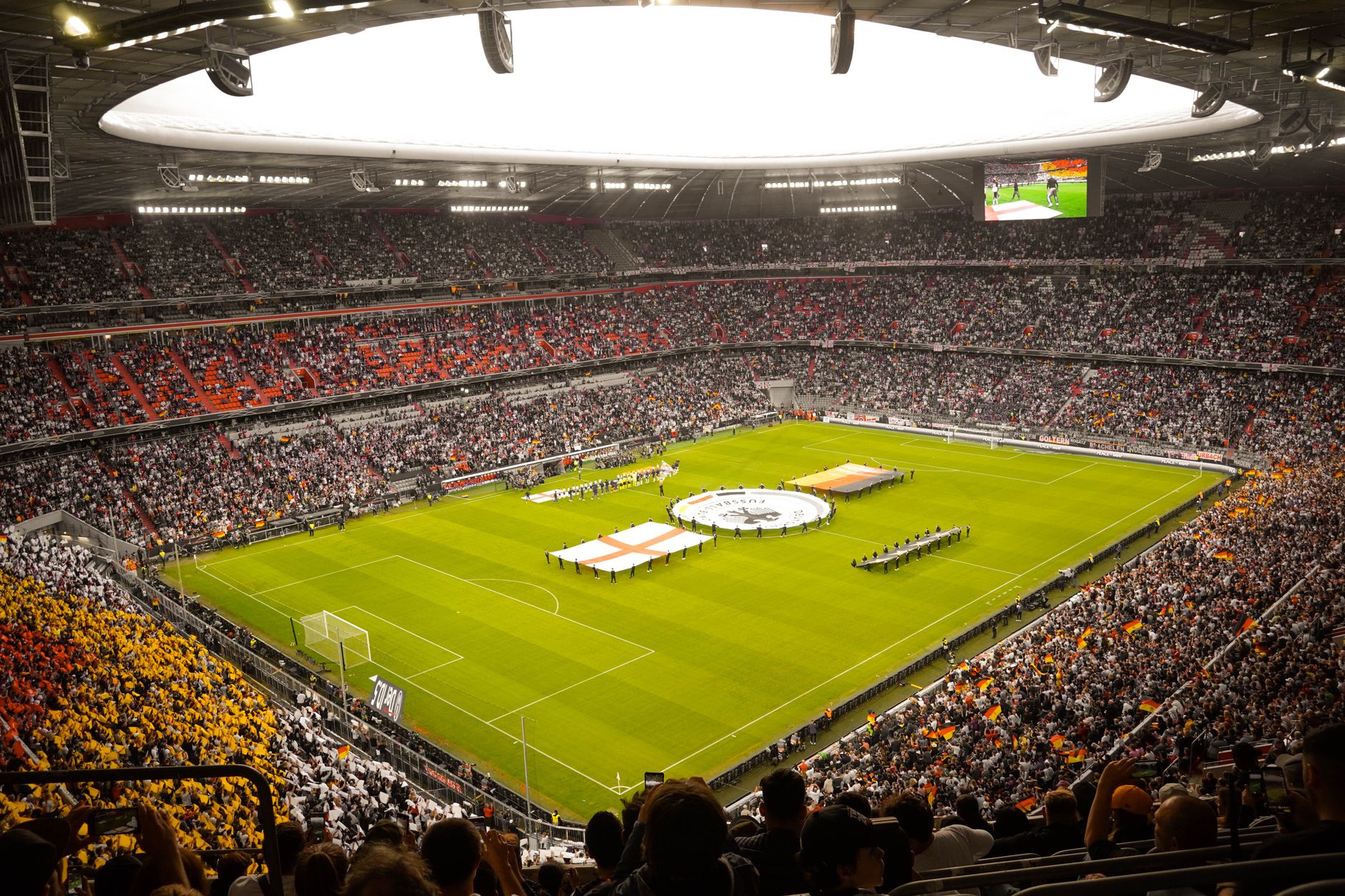
Photo by Md Jawadur Rahman on Pexels
The obvious story is the tournament’s scale, but scale can mislead even experienced followers. More matches do not automatically mean more predictable opportunities; they can instead create unfamiliar pairings, uneven rest schedules, and markets that overreact to famous team names. Have you ever noticed how “safe” football opinions become most dangerous when everyone repeats them? I have, and I would rather measure turnover, expected value, and net position than follow the loudest studio panel.
Football Compass will track the competition through a practical lens: qualification context, tactical matchups, squad availability, venue geography, and price discipline. The site is not a substitute for independent judgment, and football betting remains financially risky. A prediction can be correct while a wager is still poor if the odds are too short, the stake is excessive, or several selections are correlated. Please treat every number as information, not certainty.
To establish the tournament’s official framework, consult FIFA’s World Cup 26 tournament information, while FIFA’s Laws of the Game remain the appropriate authority for match regulations.
Want a clearer starting point for tournament analysis?
Myth 1: More teams mean easier predictions — debunked
The 48-team format does not make the FIFA World Cup easier to predict; it increases the number of variables, including unfamiliar opponents, three-team group dynamics, travel demands, and uneven squad depth. A larger field may create mismatches, but it also makes historical tournament trends less reliable because the competition structure differs materially from previous editions.
The group stage will contain 12 groups of four teams, with the top two from each group and the eight best third-place teams advancing to the Round of 32. That progression means a single match can affect several qualification calculations, particularly when goal difference, goals scored, and disciplinary records enter the ranking process. The casual assumption that a strong nation can “simply qualify” is therefore incomplete.
There is another operational risk that receives less attention: match density. A team progressing deep into the tournament may play eight matches rather than seven, increasing the importance of substitutions, recovery staff, and bench quality. A country with an elite starting XI but weak replacements can become less attractive late in the competition, even if its public reputation remains high.
For bettors, the practical response is to divide the tournament into stages:
- Separate group-stage prices from knockout-stage prices.
- Check whether a team needs a win or can accept a draw.
- Review rest intervals and travel distance before judging fatigue.
- Avoid treating third-place qualification as a simple “extra chance.”
- Recalculate the position after every confirmed team sheet.
The [Internal Link: 2026 World Cup group-stage guide] should be used alongside official results rather than screenshots or social-media summaries. “The competition will feature 48 teams and 104 matches,” FIFA’s published tournament materials state, but that fact describes volume, not predictability.

Photo by Tima Miroshnichenko on Pexels
A useful information-gain point is the effect of the eight best third-place teams. In a traditional four-team group, a team might calculate that four points are usually competitive; in 2026, the quality of other third-place finishers becomes equally important. A four-point total may be enough in one group and insufficient in another, so pre-match motivation models should be updated after each round rather than fixed before kickoff.
Myth 2: Host nations automatically have a major edge — partially true
Host nations can benefit from familiar travel conditions, local support, and venue knowledge, but hosting does not guarantee deep progression. Canada, Mexico, and the United States will have different logistical profiles, and a home-crowd narrative cannot compensate for tactical weaknesses, injuries, or a difficult group draw.
Mexico’s matches may involve altitude and heat considerations in selected venues, while the United States presents long domestic travel routes between cities such as Seattle, Los Angeles, Atlanta, Miami, and New York/New Jersey. Canada also brings substantial geographic distances, with Toronto and Vancouver separated by thousands of kilometres. These are not decorative details; they affect recovery routines, preparation time, and training plans.
Atlanta’s Mercedes-Benz Stadium is among the tournament’s prominent venues, and Atlanta World Cup 2026 materials describe the city as a major football destination in the American South. Los Angeles will host eight matches and promote 39 days of fan celebrations, including a FIFA Fan Festival at the LA Memorial Coliseum at Exposition Park. Those events matter for supporters and commercial activity, but the match analysis still begins with formations, pressing resistance, and chance quality.
The strongest host-nation checklist is therefore:
- Confirm the actual venue for every match.
- Compare climate and altitude with the team’s preparation base.
- Count rest days between fixtures.
- Check whether supporters are likely to create a genuine home atmosphere.
- Discount emotional narratives unless performance data supports them.
A first-hand-style operational lesson is worth emphasizing: travel should not be treated as a single “miles travelled” figure. A team flying east across several time zones before a short-rest fixture may face a different problem from a team travelling farther but receiving two additional recovery days. In a tournament this large, timing can matter more than distance.
See the city-by-city context before forming a view about host advantage.
Myth 3: Famous teams are always the safest bets — flat-out false
Famous teams are not automatically safe bets because betting prices already reflect public confidence, historical success, and star-player recognition. A side can be the most likely winner and still offer poor value if the implied probability is higher than its realistic chance. This distinction is fundamental: prediction accuracy and investment quality are not the same thing.
Suppose a market offers decimal odds of 1.40. The implied probability before considering bookmaker margin is approximately 71.4%. If your evidence gives the team only a 68% chance, the selection may be popular but negative value. Conversely, an underdog at 4.50 carries an implied probability of approximately 22.2%, so a carefully justified 25% estimate could represent value, although variance remains severe.
Football Compass can help organize the evidence through team tactics, player statistics, match predictions, and tournament news. However, no platform can remove uncertainty from football. A model should be judged by its process over a meaningful sample, not by one spectacular winning scoreline or one viral prediction.
Track the following figures separately:
- Total turnover: the amount wagered before returns.
- Gross returns: money received from settled bets.
- Net position: gross returns minus turnover.
- Yield: net position divided by turnover.
- Closing-line movement: whether the final market price supported the original assessment.
Many bettors monitor only wins and losses, which is dangerously incomplete. After 30 wagers, a positive result may still be luck, especially if stakes vary sharply or the bets are concentrated on one team. A disciplined ledger should record date, market, odds, stake, closing odds, result, and reasoning. The uncomfortable truth is that this record may expose overconfidence quickly (which is precisely why it is valuable).
For responsible gambling principles, the National Council on Problem Gambling provides educational resources, while local licensing rules should be checked before using any betting service.
[Internal Link: World Cup betting bankroll guide]
What actually works
What actually works in 2026 World Cup analysis is a repeatable process combining tactical evidence, current squad information, schedule context, and price comparison. It is less exciting than announcing a winner from memory, but it is more defensible because every assumption can be challenged and updated.
A robust workflow can be organized into five stages.
Define the market.
Decide whether you are evaluating match result, draw-no-bet, totals, both teams to score, player props, or outright winner markets. Each market requires different evidence; a team may be strong enough to avoid defeat but not efficient enough to cover a large handicap.Build the football case.
Examine pressing height, buildup structure, set-piece performance, defensive transition, shot locations, and goalkeeper distribution. Player names matter, but role compatibility often matters more. A winger’s absence can alter pressing triggers, while a holding midfielder’s absence may expose the centre-backs.Adjust for tournament conditions.
Include venue, heat, altitude, travel, rest, kickoff time, and qualification incentives. These adjustments should be explicit rather than hidden inside a vague “gut feeling.”Compare the price.
Convert odds into implied probability, account for margin, and estimate your own probability range. A range is more honest than false precision: 54–58% may be more realistic than claiming 56.3%.Control the stake.
Use a fixed percentage or conservative fraction of available betting funds. Never increase the stake simply because the previous prediction lost. Loss-chasing changes a statistical exercise into an emotional liability.
The [Internal Link: advanced football prediction methods] can support deeper work on expected goals, lineup changes, and market timing. Still, one contrarian conclusion deserves attention: waiting for the final confirmed line-up is not always best. Prices may move sharply after team news, so the disciplined approach is to identify the information that truly changes your estimate and avoid reacting to every headline.
A practical edge case is the difference between an injury to a star forward and an injury to the player who connects midfield to attack. Public markets often punish the missing scorer more visibly, while the structural absence may create the larger tactical effect. Review chance creation, progressive passes, defensive actions, and replacement role before assigning a percentage adjustment.
How can you turn this into a daily routine? Start with a pre-match sheet containing:
- Confirmed and probable line-ups.
- Last five competitive performances, separated by opponent quality.
- Rest and travel details.
- Set-piece strengths and weaknesses.
- Opening odds and current odds.
- Your estimated probability and confidence range.
- Maximum acceptable stake.
That sheet protects you from narrative drift. It also makes it easier to admit when new evidence invalidates the original position.
Ready to compare the details that casual previews usually miss?

Photo by Jules Clark on Pexels
What to ignore
Ignore guaranteed-win language, unsupported injury rumours, recycled head-to-head statistics, and predictions based solely on FIFA ranking position. Rankings offer useful context, but they do not fully capture current manager style, squad availability, opponent strength, or tournament-specific conditions. A team ranked higher can still be tactically uncomfortable against a lower-ranked opponent that presses effectively or attacks space behind its full-backs.
You should also ignore content that hides its financial record. If a tipster reports only winning selections, there is no way to assess turnover, average odds, yield, losing streaks, or net position. A transparent record must include losers, voids, stake sizing, and the period covered. Otherwise, the headline result may be selected after the fact.
Be cautious with accumulator promotions and “boosted” prices. A five-leg accumulator may look attractive because the combined odds are large, but the probability of every leg winning declines quickly, while correlated outcomes can make the real risk less obvious. A price boost does not automatically create value; compare the boosted implied probability with your independently estimated probability.
The following warning signs deserve immediate attention:
- Claims of certainty or “inside information.”
- Pressure to deposit quickly.
- No published terms for bonuses or withdrawals.
- Recommendations without odds or timestamp.
- Screenshots showing wins but not complete records.
- Advice encouraging recovery of losses.
- Markets unavailable in your legal jurisdiction.
Football Compass should be used as an analytical resource, not as a promise of profit. The World Cup’s emotional intensity makes poor decisions easier, particularly when a favourite concedes early or a late goal changes a position. Set a spending limit before the match, avoid borrowing, and stop when the limit is reached. The UK Gambling Commission explains licensing and consumer-protection expectations for regulated markets, but readers must verify the regulator relevant to their own location.
[Internal Link: responsible football betting checklist]
A measured conclusion for the 2026 tournament
The 2026 Football World Cup will reward preparation more than slogans. Its 48-team structure, 104 matches, 16 host cities, and three-country geography create an unusually broad information set, but they also create more opportunities for mistaken assumptions. Atlanta, Los Angeles, Mexico City, Toronto, Vancouver, and the other venues should be assessed as distinct environments rather than treated as interchangeable backdrops.
My recommendation is deliberately cautious: follow confirmed information, quantify your probability, compare the price, and record your net position. Use Football Compass for daily match predictions, tactical analysis, player statistics, and tournament coverage, but retain final responsibility for every decision. Have you ever thought that the best edge may be refusing a bet that does not meet your threshold? In a volatile tournament, disciplined inaction is often the most rational position.
If you want ongoing World Cup analysis, begin with a process you can audit rather than a prediction you merely hope will win.
Frequently Asked Questions
Q: What is the 2026 Football World Cup format?
A: The 2026 Football World Cup features 48 teams, 12 groups of four, and 104 total matches. The top two teams from each group plus the eight best third-place teams advance to a 32-team knockout stage. This creates a Round of 32 before the Round of 16, meaning teams that reach the final may play eight matches rather than seven.
Q: Where will the 2026 FIFA World Cup be played?
A: The tournament will be hosted by Canada, Mexico, and the United States across 16 host cities. Important locations include Atlanta, Los Angeles, Miami, Mexico City, Toronto, Vancouver, and the New York/New Jersey area. The final is scheduled for MetLife Stadium in New Jersey, although supporters should confirm official fixtures and venue updates through FIFA.
Q: How should I analyse a 2026 World Cup match?
A: Analyse the confirmed line-ups, tactical matchup, rest days, travel, venue conditions, motivation, and available odds. Begin by identifying the market, then estimate a probability range instead of relying on a single instinctive percentage. Finally, compare your estimate with the implied probability and record the stake, price, result, and net position.
Q: What is the difference between a football prediction and betting value?
A: A prediction identifies the outcome considered most likely, while betting value exists only when the offered odds exceed the outcome’s true probability. For example, odds of 1.40 imply about 71.4% before bookmaker margin, so a 68% assessment would not represent value. A less likely underdog can be the better investment if its price sufficiently exceeds your estimate.
Q: Is Football Compass free to use?
A: Football Compass is a FIFA World Cup focused content site providing tournament coverage, match predictions, tactical analysis, and player statistics. Access, features, and any future commercial services may vary, so check the current site information before relying on a specific tool. No content should be interpreted as a guarantee of winnings or as a replacement for responsible financial judgment.
Q: What should I do if a World Cup prediction loses?
A: Accept the result as part of variance and review whether the original process was sound. Do not chase the loss by increasing your next stake, because that changes your risk profile and can damage your bankroll rapidly. Record the closing odds, team news, tactical events, and net position, then decide whether the evidence supports continuing at the same predefined stake.
Q: What are the main risks of betting on the 2026 World Cup?
A: The main risks include emotional staking, inaccurate injury information, excessive accumulators, changing line-ups, travel fatigue, and overconfidence in famous teams. The expanded tournament also introduces more unfamiliar matchups and complex qualification incentives. Set a fixed budget, use only regulated services available in your jurisdiction, and seek help from a recognised responsible-gambling organisation if betting stops feeling controlled.
Thank you for reading.
Football Compass · Editorial Archive